Published 07/28/26
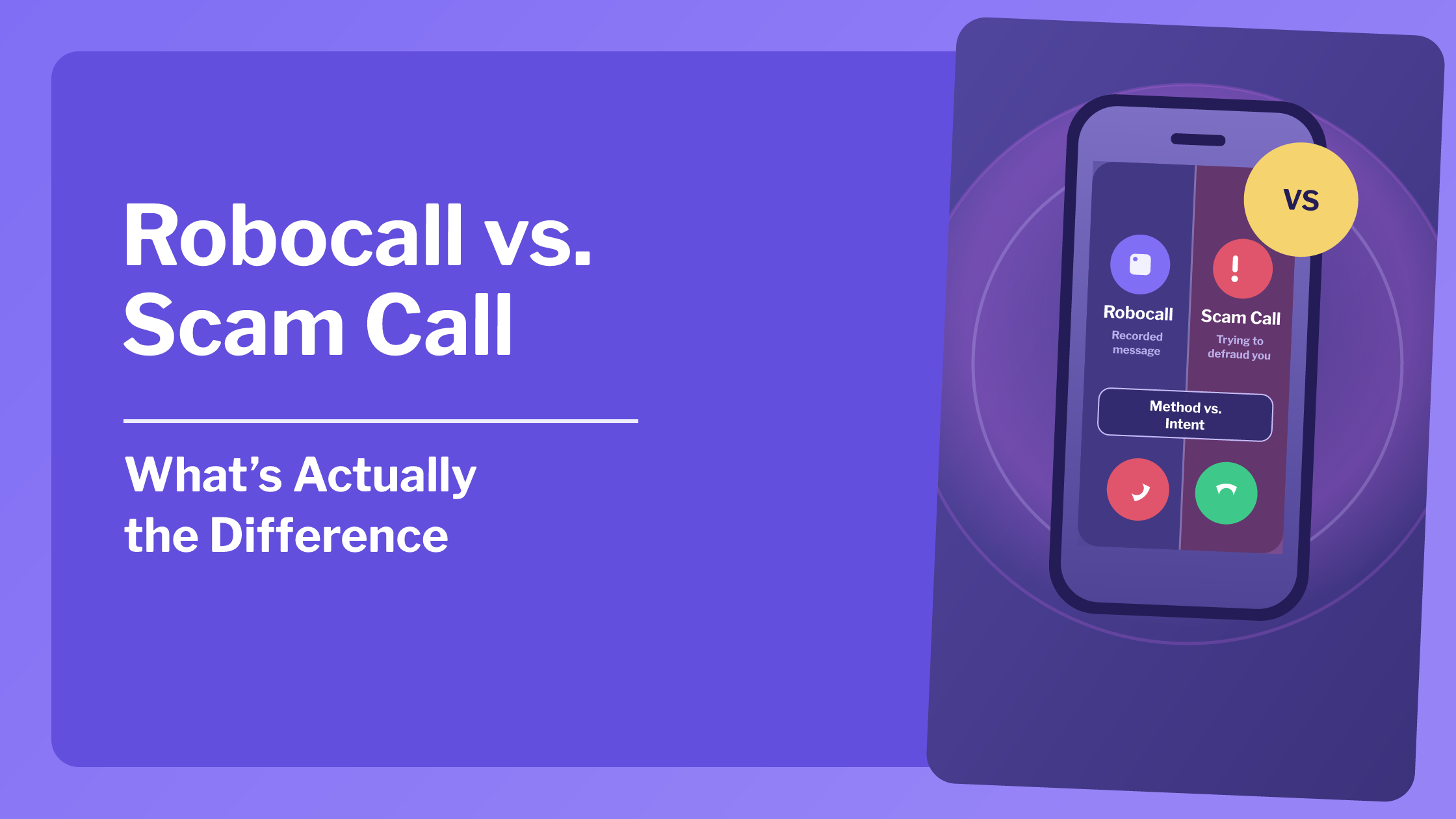
A robocall is any call placed by automated dialing software that uses a pre-recorded message. A scam call is any call, robotic or human, that's trying to defraud you. The two sometimes overlap but are not the same thing. Robocalls can be totally legal, for example, a dentist appointment reminder. And scam calls are sometimes a real human on the other end, with no recording at all… This is what gets confusing about all these unknown calls. But knowing clearly what each one is can help you know how to deal with them.
What exactly is a robocall?
A robocall is defined by the method, not the intent behind it.
It’s used to describe any automated system to dial your number and give over a message. These are usually not fraud, and the FTC and FCC regulate these under specific rules of consent etc. A robocall can be extremely helpful for businesses who don’t want to hire someone to make a bunch of repetitive calls. Doctor’s offices and utility companies can set up this system to send appointment reminders or outage updates.
What exactly is a scam call?
A scam call is defined by intent, not method.
It’s someone who’s trying to get money or personal information out of you. It can happen via a recorded robocall or a live person, doesn’t matter. If they’re trying to defraud you, it’s a scam and you must proceed with caution. Examples of scam calls are the "IRS is filing charges against you" call and the fake tech support agent.
Can a robocall be legal and still annoying?
It definitely can.
The law has rules about identifying the caller and honoring opt-outs. But legal still doesn’t mean you’re interested. Like a charity solicitation or a political call convincing you to vote. And even if you are, sometimes they can simply get too much. There’s no need to remind me 4 times about my appointment tomorrow, for heaven sake!
Illegal robocalls completely skip the requirements and ignore the Do Not Call registry completely.
How can you tell which one you're dealing with?
A few signals to be aware of:
Anything asking for payment via gift cards or wire transfer or cryptocurrency is always a scam. That’s regardless of whether it's a recording or a person. Legitimate businesses and government agencies will never ask for those.
Urgency. "Your account will be suspended in the next hour" is an obvious sign of a scam. Something real will give you more notice and won’t sound so desperate, so don't fall for it.
Here’s where it gets tricky: If someone has some accurate information about you (like last 4 digits of a credit card), it can go either way. It is possible it’s your real bank, or can be it’s just a scammer who hacked some of your personal information. This is really hard to tell from the call alone. Your best option in this situation is to hang up and call your bank back on a trustworthy number. Then you can ask and find out if any action is required on your part.
What should you do differently?
If you’re just trying to reduce the noise of legal robocalls, try blocking the number and registering with the Do Not Call Registry. That should help.
For a suspected scam call, never give them any personal information. Hang up right away and report it to FTC's fraud reporting site. It takes records of all kinds of scam calls and tracks patterns to help protect more people from scams.
If you're not sure which you're facing, I say treat it like a scam call. The cost of trusting a scam is not worth it. Rather be a bit over-cautious when it comes to these things.
Does the "Scam Likely" label sort this out for you?
Not fully.
That label means that your carrier decided that it’s unsafe, based on its database of patterns for scam calls. But it can very likely just be a robocall as well, since this is an automated system and not fully reliable to know which is which.
Why does my phone say Scam Likely goes deeper into how accurate that label really is.
When you already answered and aren't sure what happened
If you picked up, and only realize after that something is off, all hope is not lost. Take a look at the blog on what to do if you accidentally answer a scam call. It will walk you through the steps of what you can do, especially if you mistakenly shared some personal information…
And if what’s bothering you is not knowing who’s calling, iCaughtYou can easily find out who it is for you.
Bottom line
Robocall describes how a call was placed. Scam call describes what it's trying to do. A call can be one, the other, both, or neither.
When in doubt, use urgency and unusual payment requests to tell you the truth. Don’t base your assumptions on whether or not a human is talking.