Published 09/17/26
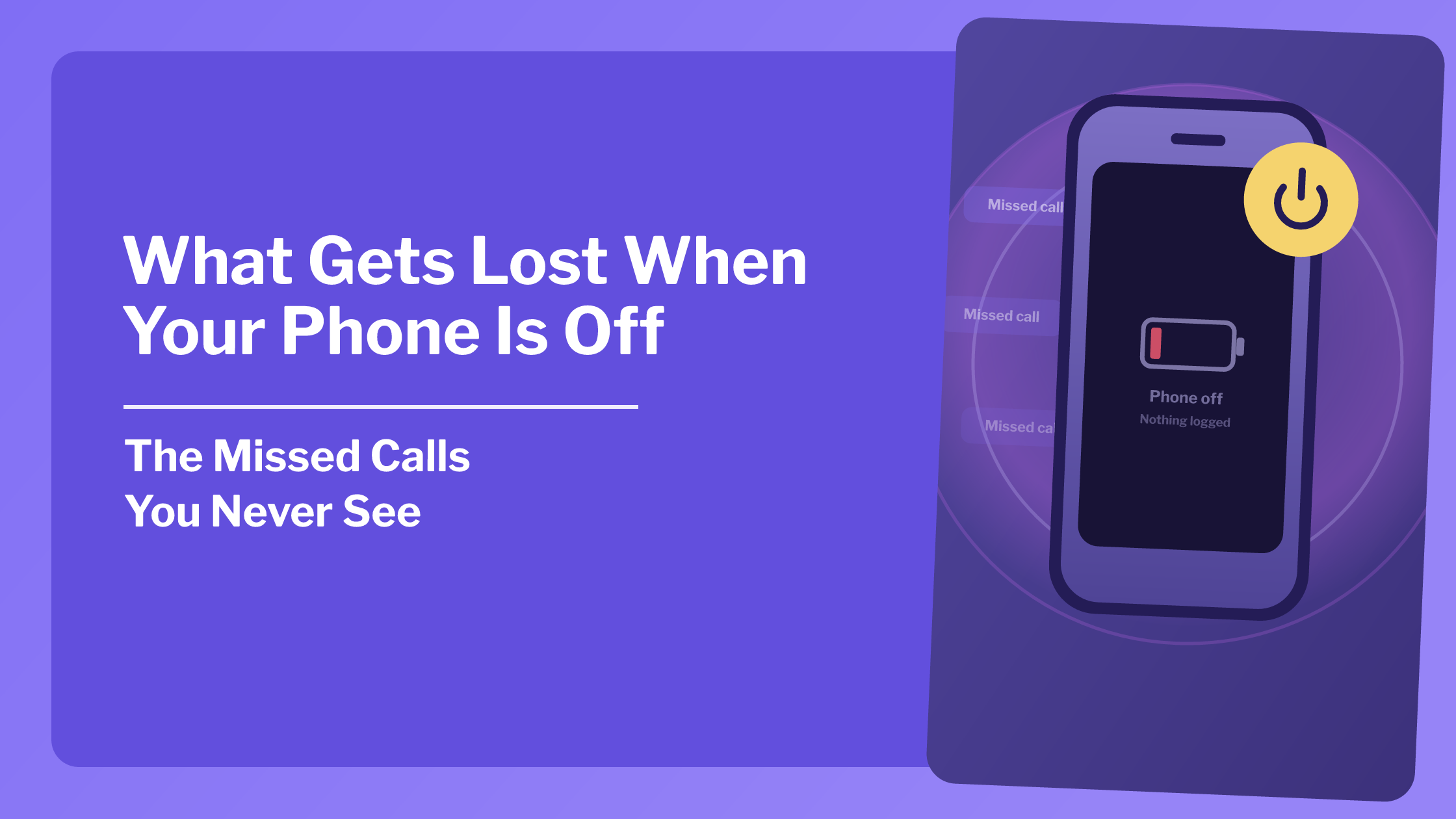
When your phone is off or the battery is dead, incoming calls never reach the device, so the phone has nothing to log. Your phone will only keep track of it if the caller left a voicemail.
Do Not Disturb is different. The call reaches your phone and lands in your call history; it just doesn't ring.
So whether you find out about a missed call just depends on what state your phone was in at the time the call came in.
What happens to a call when your phone is off?
The call gets to the network as usual and the carrier tries to reach your phone. It can’t, so the call is stuck there. When this happens, the caller is sent to voicemail and that gets saved somewhere so when you turn your phone back on, it’s there. The missed-call list still stays empty because your phone never saw the call.
What’s the difference between Do Not Disturb and the phone being off?
Do Not Disturb just silences the ringer. It literally just keeps you from getting disturbed, without getting involved with the way the call reaches you.
When the phone is completely off, the call doesn't reach the phone at all. Therefore, nothing gets logged because nothing was there to do the logging.
If you're weighing silencing a caller against actually stopping them, the difference between blocking and blacklisting covers that distinction.
Can the caller tell your phone was off?
They can never know for sure, but it should be easy for them to guess.
There are only a few instances where a call would go straight to voicemail. Either you’re on the airplane, nothing will tell them straight out.
How to stop losing the calls that matter
Record a real voicemail greeting. A default robotic greeting will get more hang-ups than if you record your own.
Turn on carrier missed-call alerts (if your plan offers them). Then you’ll get a list of who tried to reach you.
Use Do Not Disturb instead of powering off when you need quiet. It keeps the call log intact, and you can also add certain people who can always get through. Apple's Do Not Disturb guide and Google's Android Do Not Disturb guide both cover setting those exceptions.
Keep a record that doesn't depend on the handset. iCaughtYou keeps a record of calls that came in while your phone was off or unreachable. They show up in your call history as usual with the time and who it was. It keeps it much easier and clearer than piecing it together from voicemail and carrier texts.
What if the missed call was from a blocked or unknown number?
Then you're missing twice over.
You don't know that they called, and you wouldn't know who it was even if you did.
Why do some calls show up as No Caller ID explains how the number gets hidden in the first place.
And if you're wondering how much can realistically be recovered after the fact, can you really find out who's behind a hidden number covers what's possible and where the limits are.
Bottom line
A call that arrives while your phone is off leaves no trace on your phone. Voicemail and carrier alerts can recover some of it, and a separate call record can recover some more.
iCaughtYou can keep track of all of it in one place.