Published 06/25/26
Spam texts, also called smishing, are unsolicited messages sent by scammers or automated systems trying to capture your information. Most include a link; the goal being to get you to click it. Ignoring and deleting is nearly always the right call. Just know that any reply (even to say stop) confirms your number is active and puts you on more lists.
Why am I getting spam texts?
Your number ended up on a list. It was either scraped from a data breach or sold by a data broker. Or it was just auto-generated by some software that cycles through numbers until something responds. And texts are cheap to send in bulk, so they just blast them out.
The most common lures are fake delivery notifications and banking alerts. Fake prize messages still circulate too, though they're a little less convincing than they used to be. Whatever the hook, the goal is to get you sucked into the scam before you can think.
What does a smishing text actually look like?
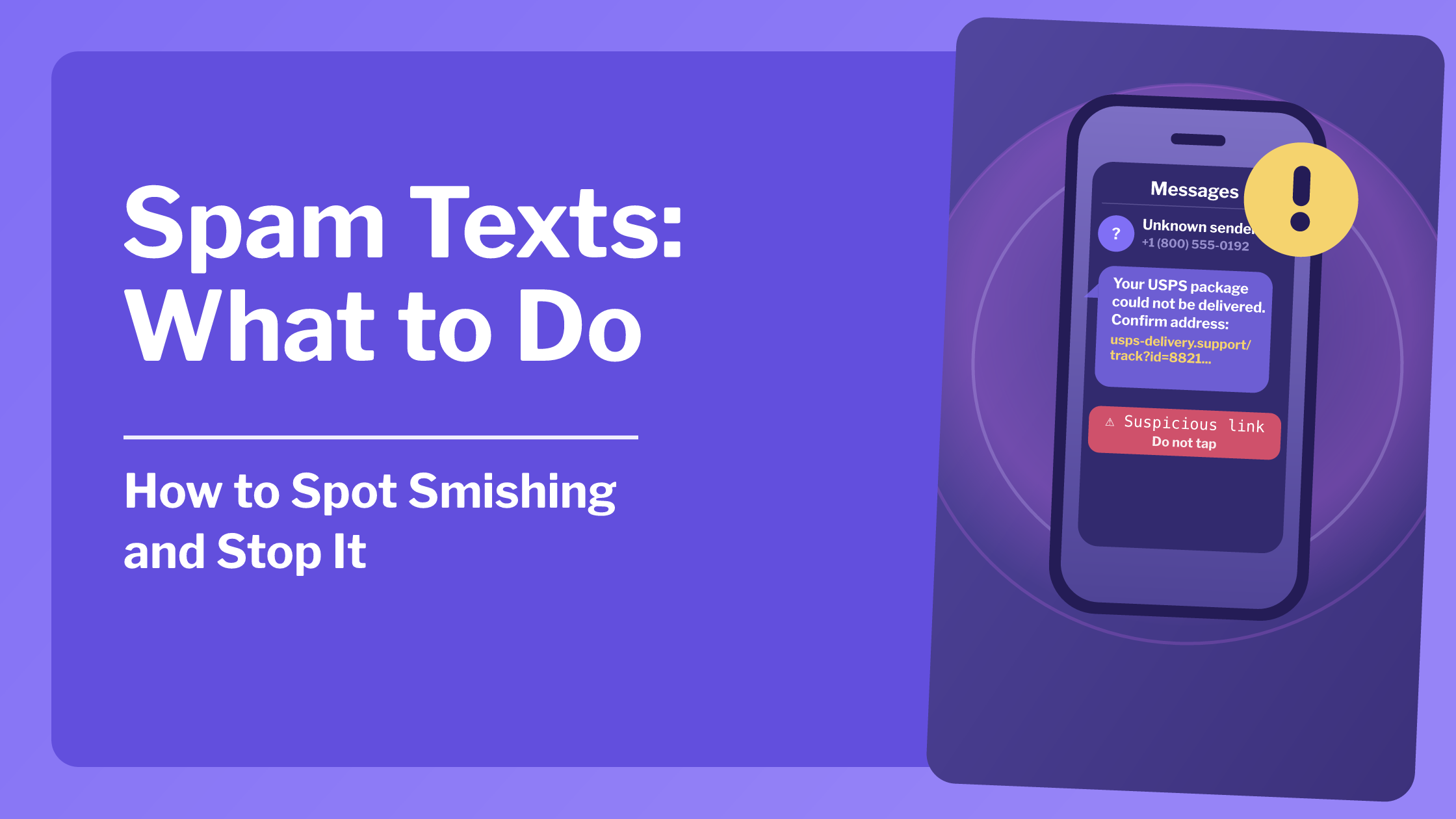
It’s usually a weird balance between vague and urgent. Like a package you may or may not be expecting, or a charge you don't recognize. The sender is usually a random number rather than a recognized short code, and the URL domain looks almost right but isn't. "usps-delivery[.]support" instead of usps.com, for example.
One telltale sign is the pressure and deadlines, like ‘you have 24 hours to respond’. Real institutions almost never text you with that kind of deadline.
What happens if you click a smishing link?
Clicking alone is unlikely to install malware on a modern smartphone, but it does confirm your number is active. It then also takes you to a page built to capture information. Entering anything there is the real risk.
If you clicked and handed over financial details by mistake, contact your bank right away. Then report to the FTC at reportfraud.ftc.gov.
How to stop spam texts
No single setting eliminates them, but a few things can limit them.
Don't reply. Even "STOP" tells a bulk sender your number is live and someone reads the messages.
Report and block. On iPhone, tap "Report Junk" under the message. On Android, press and hold the message and block the sender. You can also forward texts to 7726 (SPAM), which feeds into carrier filtering.
Register with the Do Not Call Registry. The FTC's registry covers some text traffic from legitimate telemarketers. It won't stop criminal smishing, but it reduces the volume of these messages.
Reduce your data footprint. Your number is likely sitting on data-broker lists. Opting out takes effort and time, but it does thin the pipeline. Who's selling your phone number covers how that works.
When the text seems personal
Most spam is bulk-sent with no specific target. If a text feels directed at you or comes from a number you kinda-recognize, then it’s worth a closer look.
iCaughtYou can look up the number behind a suspicious text the same way it handles blocked calls. If you want to know whether the sender is a real person before you engage, icaughtyou.com does the lookup so you don't have to guess. For more on what repeated contact from unknown numbers means, why unknown calls trigger anxiety and how to stop it is worth a read.
Bottom line
Most spam texts are impersonal and automated. Block the number and delete the message.
If you entered any financial information after clicking a link, get to your bank before they do.
If a text feels like it knows something about you, it’s worth checking into it.