Published 08/25/26
What matters more than anything right now is to act fast.
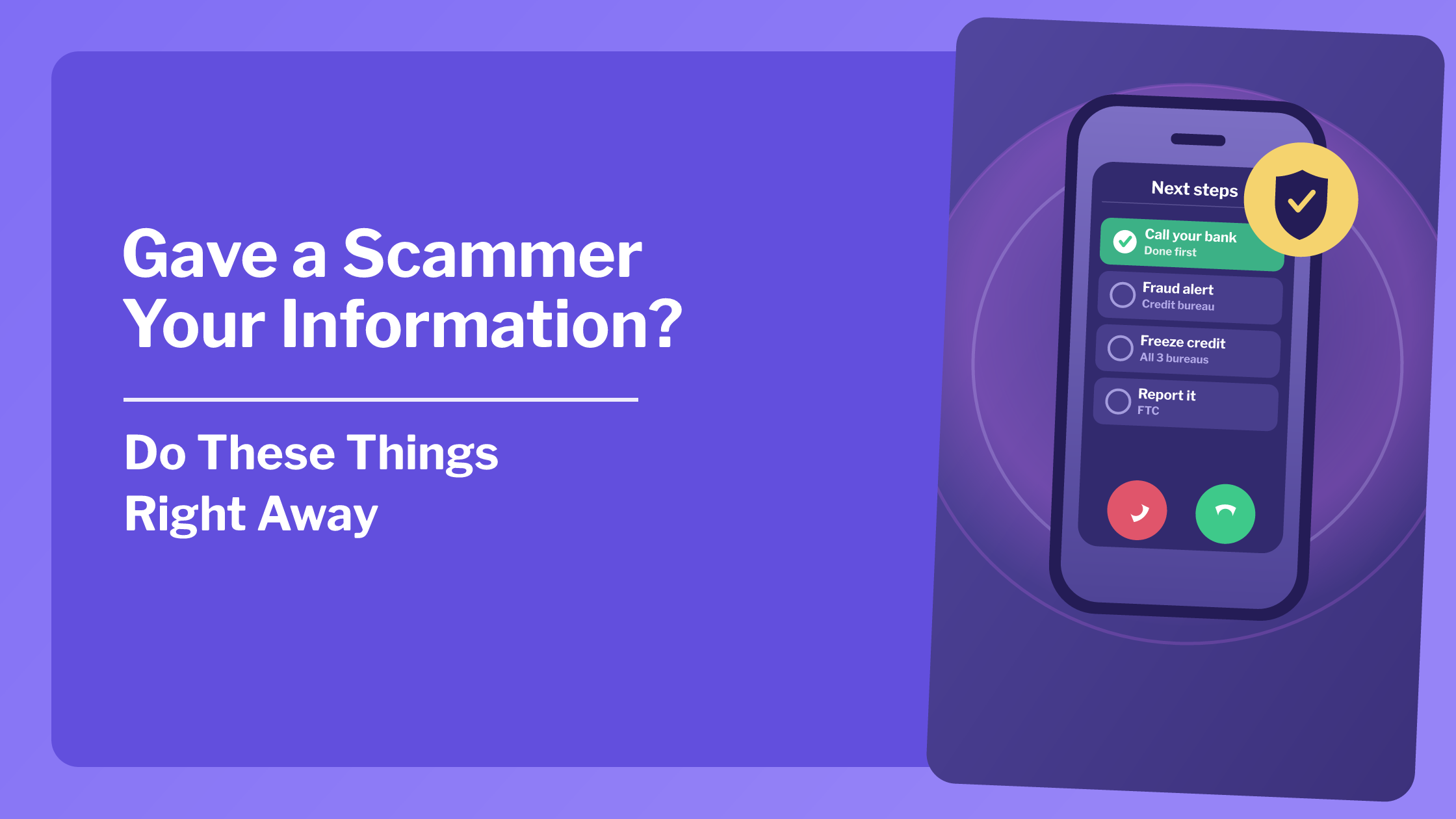
If the info you gave over is financial details, call your bank immediately using the number you find on the back of your credit card. Never use a number that one of these callers gave you. If you gave them your Social Security number, place a fraud alert with one of the credit bureaus and maybe consider doing a credit freeze.
After you do these, you can report the call and monitor your accounts. Those also matter, but only after you take care of the above.
What should you do first, right now?
Take a moment to breathe. All will be okay.
Then, understand what is at risk and notify the necessary parties that you've been scammed. These places usually have protocols because they understand that this is a widespread problem.
If there was money involved, your bank can freeze your account or block transactions on your card. If you let them know right away, you can hopefully catch it before the scammers take your money. To do this, call them directly using the number on the back of your card or the one on their official website. Never use a number the person on the phone gave you.
If you gave your Social Security number or something private like that, it's not as time-sensitive, but here's what you should do whenever you can: put the fraud alert and credit freeze in place. (see below on how to do this)
What information did you actually give up?
This is important because it determines what you need to do next to protect yourself. Take a moment to think about which details were exposed and then take care of those. Don't let your alarm get out of hand and stop you from focusing on what’s important here.
Card or bank details mean your bank is the first call.
A Social Security number means the credit bureaus are next.
Login credentials for an account mean changing that password immediately (and any other account using the same password too).
Just a name and address is lower stakes but still worth general awareness, since it can feed into future targeted attempts.
How do you place a fraud alert?
Find the number and contact one of the three major credit bureaus: Equifax, Experian, or TransUnion. Whichever one you contact is required to notify the other two automatically, so you don't need to repeat the process three times.
A fraud alert is free and lasts one year. It just adds a setting on your account that requires anyone trying to open credit in your name to verify your identity very thoroughly. It is the simpler option, as opposed to a full credit freeze, so it might be worthwhile if you think the exposure is not so serious.
Should you freeze your credit instead?
A credit freeze is the stronger version of the same idea, and it's also free.
It blocks new credit from being opened in your name at all until you lift it, so it’s effective for something more serious, like a Social Security number that was exposed.
If you do freeze it, you just have to temporarily lift it yourself whenever you want to apply for a credit account.
What should you watch for in the weeks after?
Keep an eye on your bank and credit card statements for anything unusual or unrecognized. Sometimes these people start small in order to test whether the account is being watched, then only later do they start with the big purchases.
Pull your credit report and look for any account you don't recognize. You're entitled to a free report from each bureau, so check periodically over the following months.
Should you report what happened?
You most certainly should. But don't get fooled into thinking that's enough. It doesn't really do much for you right now, it's just to help limit these things from happening in the future.
The FTC's identity theft site walks through reporting and gives you a recovery plan tailored to what was exposed. If the scam specifically impersonated a government agency, signs of a government impersonation scam is worth a read. It will help you to recognize it faster next time and to see how common this problem is.
What if more calls keep coming after this one?
Once your information is circulating, it's common to see a jump in suspicious calls for a while afterward.
iCaughtYou can help you identify who's behind the unfamiliar numbers that follow. That way, you're not stuck guessing which ones are related to what happened and also, to prevent it from happening again. Really knowing who's calling is something that warns you before.
Bottom line
Being quick does matter here. The credit bureaus and your bank are first to notify. Next, you can move on to reporting, monitoring, understanding what happened, etc.