Published 07/21/26
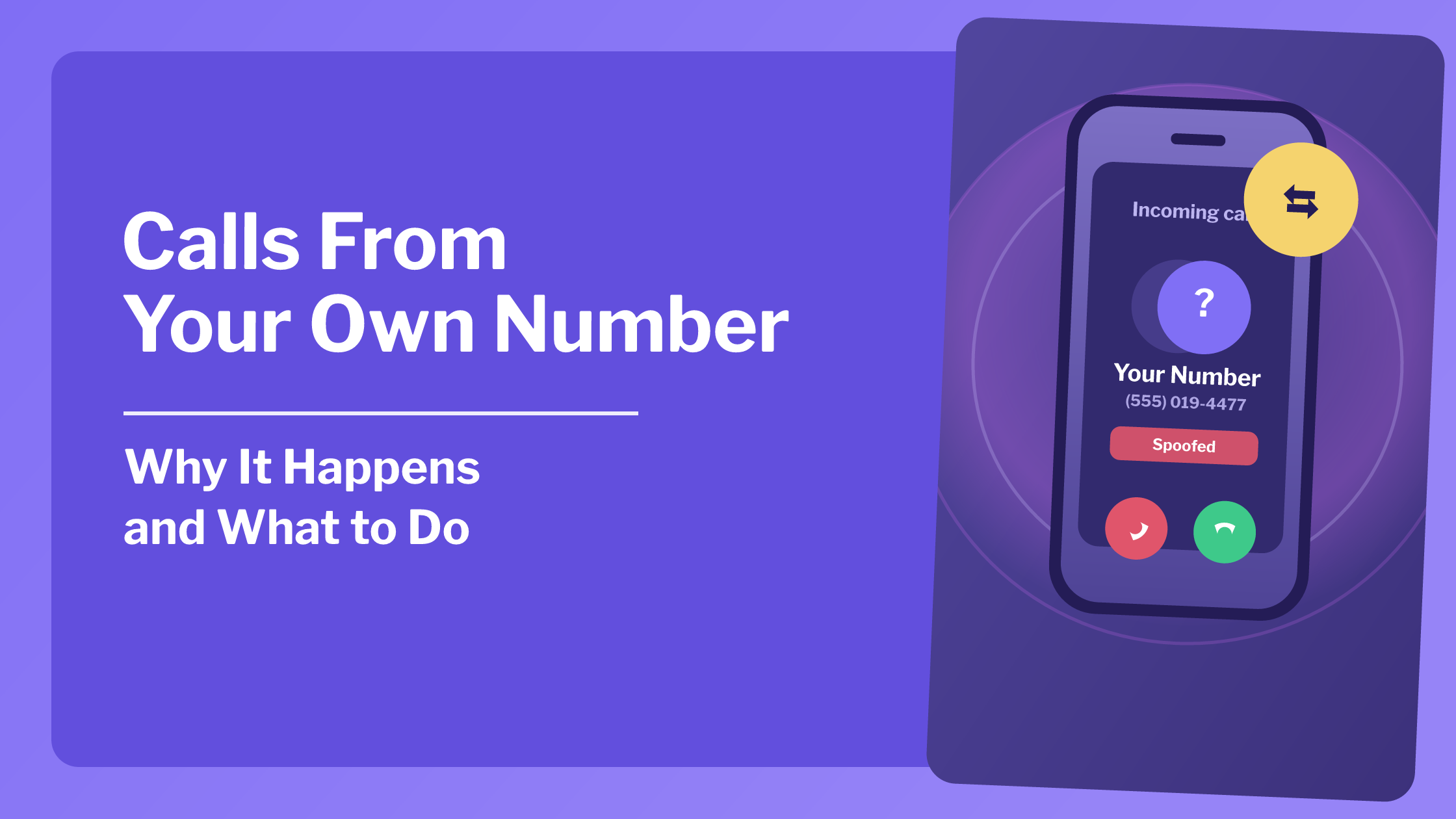
When you see your own number calling you, it’s something called spoofing. It’s a trick scammers use that basically lets them place a call with their choice of what shows up. They can choose any number, and sometimes they’ll pick yours.
The reason scammers use this is because it works. When you get a call from yourself (or so it seems!), it’s too intriguing not to answer. And that’s exactly their goal.
But don’t panic, nothing on your phone or account was actually compromised to make this happen.
How does someone call you from your own number?
Spoofing software lets a caller set whatever caller ID they like before dialing, and here they just happened to choose yours. Or maybe it wasn’t such a coincidence…
Either way, the tools to do this are cheap and easy to find, which is exactly why the tactic is so common.
Is my phone or account hacked?
No, don’t worry, it’s not. Even though at the moment it can be genuinely alarming.
Spoofing happens entirely on the caller's end. Your phone, your carrier account, etc. are untouched.
If you’re paranoid and need to double-check, just take a look at your recent outgoing calls. You’ll see it’s not there, and that shows you that no one hacked into your phone. Phew.
Why do scammers spoof your own number specifically?
It’s just an easy trick.
These days, people are quite wary of scam calls since they’re unfortunately so common. Many people don’t answer unknown numbers at all anymore. But when you recognize that number as your own, it causes 2 things:
Makes you wonder how you can possibly be calling yourself, and
gives a certain sense of safety.
Then, your guard is let down. It’s the perfect way for them to get you to do what they want, which is answering the phone.
Some even take it further and use the moment to claim your phone or account has been compromised, They then push you toward "verifying" personal information.
The spoofed number is just to get you hooked on, then they continue with the scam.
Does *67 or blocking your own number help?
Not quite.
Blocking your own number in your contacts seems like a good idea but doesn’t actually accomplish anything. The call isn't routed through any list you control.
What can help is turning on your carrier's spam-filtering and call-blocking tools, the same ones used for any other suspicious call. These catch spoofing patterns in general, not just the ones that choose your number.
What to do if your own number calls you
Don't answer, or answer but stay guarded. Either is fine. If you do pick up, don't confirm any personal information no matter what.
Ignore any urgent account claims. A caller using this trick often follows with a fake urgent problem. Hang up and contact your provider to make sure everything is okay.
Report it. The FCC tracks spoofing complaints and has a dedicated page at fcc.gov/spoofing.
Turn on your carrier's spam filtering. This won't stop every spoofed call, but it catches a lot.
Will this ever fully stop?
Not completely.
At least not yet.
Carriers are trying. They put out authentication standards meant to verify that a caller ID matches the real originating number, and it's definitely made a dent. But since the spoofing technology is also advancing at the same time, it hasn’t stopped it completely.
Find out who's really behind the number
The unsettling part of this whole scam is the not-knowing: your number is on the screen, but a stranger is on the other end.
iCaughtYou is built for exactly that problem. It works to trace what's actually behind a spoofed call, so a fake "you" calling gets revealed into real information.
For the mechanics of how spoofing works more broadly, caller ID spoofing explained is the deeper guide.
And if this kind of call has left you anxious about your phone in general, why unknown calls trigger anxiety and how to stop it is worth a read.
Bottom line
Just know that a call from your own number is spoofing, not a hack. Nothing on your end has been touched.
Don't answer, or answer without giving anything up if you do. Report it, and turn on your carrier's filtering.
And if you ever did give up account details or money to a call like this, contact your bank right away, then report it to the FTC at reportfraud.ftc.gov.