Published 07/21/26
A call that stops after one ring is strange. Just think about it. If someone is really trying to get through to you, why would they hang up so quickly??
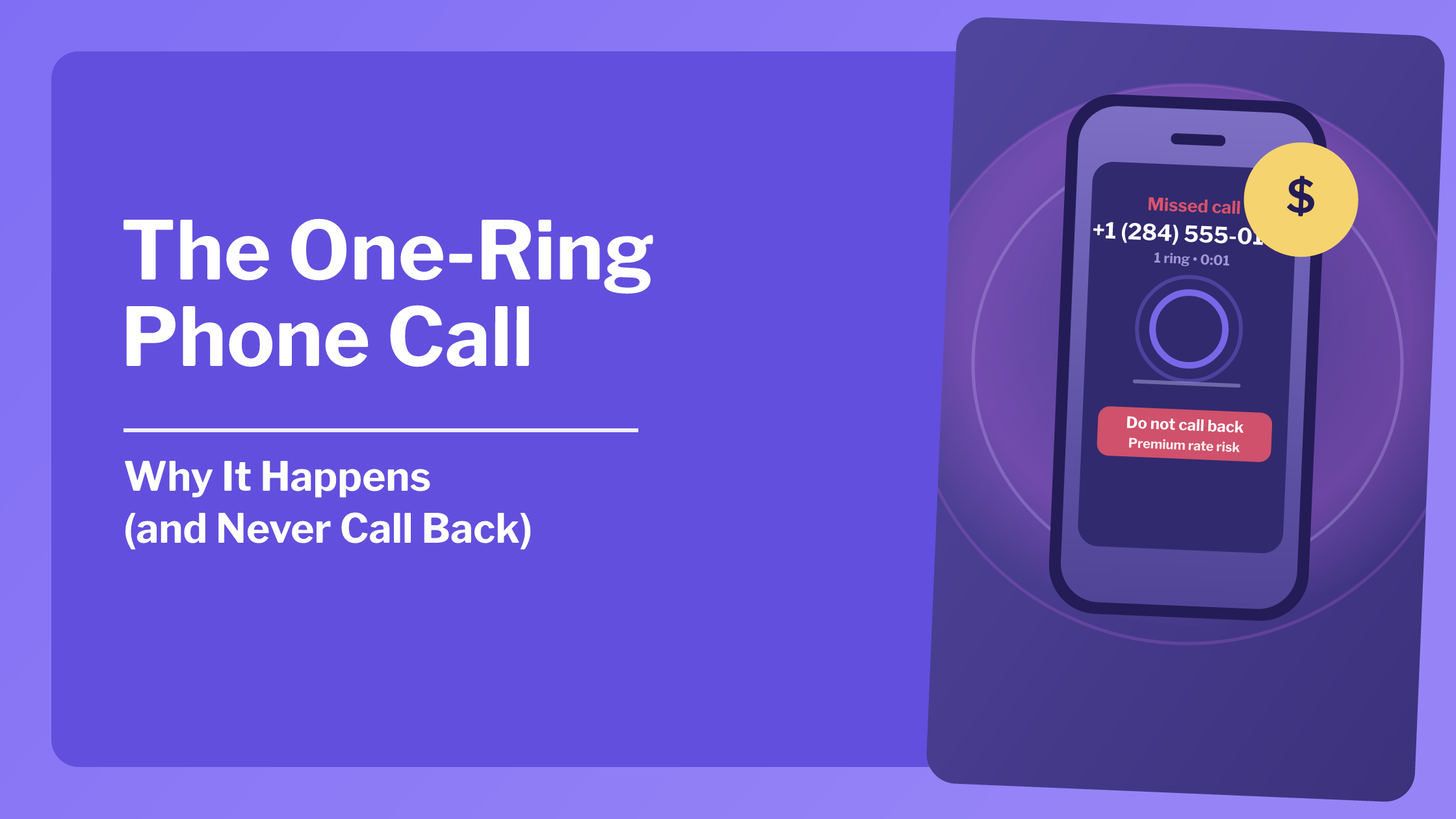
The most common version of this kind of call is a Wangiri, Japanese for "one ring and cut." The caller hangs up super fast on purpose, just to get you curious so you’ll call back.
The safe response to the situation is simple: don’t call back.
What is the Wangiri scam?
Wangiri started as an international billing scheme and has been running for decades.
The scammer dials thousands of numbers, letting each ring exactly once before hanging up. All you need is a single ring for it to show up as a missed call… That is enough to trigger curiosity in a percentage of people every time.
If you call back, you're connecting to a premium-rate number the scammer controls. And every second that you stay on the line, they’re making more money.
How do you know if a missed call is a scam?
When it’s a scam, there are a couple of signals that can give it away:
The call rings once, or sometimes half a ring. Then it stops suddenly.
It usually comes from an international number, but often one with an area code that looks domestic. Like Caribbean codes such as 268, 284, or 876 that resemble regular US area codes.
So if any of these apply, beware and hold off on the callback.
Why does the call only ring once?
That part can seem like a mistake, but not quite. It’s the whole mechanism, completely intentional.
All the scammer wants is for you to get a missed call notification. The nature of this specific scam is that they don’t get anything if you would answer the call. They only make money when you call the number back, so that’s why they wouldn’t risk letting it fully ring.
Is it safe to call back a one-ring number?
No, please don’t call back if you don't recognize it.
Calling back can connect you to a premium-rate line that charges you! Sometimes per minute, sometimes a flat connection fee. The charges show up on your next phone bill, often disguised as a standard international call.
What’s crazy is that some versions would keep you on hold specifically to run up the clock. Nasty, but that’s their whole point.
What should you do instead of calling back?
Just leave it alone. If you don't recognize the number and no message follows, there's nothing to respond to.
Check your phone bill. If you already called back, look for unfamiliar international or premium charges and contact your carrier if you find one.
Block the number. It won't stop the next one from a different number, but at least it clears this one for good.
Report it. The FCC accepts complaints about fraud calls, and your carrier might also track patterns. It can help other customers too.
Can you get your money back if you already called?
Sometimes you can but it’s not guaranteed.
Here’s what to do; contact your carrier as soon as you notice the charge. Some carriers would reverse a suspicious charge. But it does help if you flag it quickly and also they get skeptical if you do it too often. So it’s worthwhile to verify before asking for the money.
Why does the number look almost like a US number?
This is the part that trips people up the most.
Several countries and territories use area codes in the same 3-digit format as the US, because they're part of the North American Numbering Plan. A number starting with 284 looks like a typical, domestic area code. But it's actually the British Virgin Islands, and the call would be billed as international.
Be aware and don’t get fooled even when your phone displays a number that looks like it can literally be your neighbor.
Find out who's really behind the number
A one-ring call leaves you with one piece of information: that a number called. There’s no way to know what it actually is without risking a callback.
iCaughtYou looks up a number without you having to dial it, so you get an answer instead of a gamble!
If you're dealing with more unfamiliar numbers beyond just one-ring calls, can you really find out who's behind a hidden number, covers what a lookup can and can't tell you.
And if these calls have started making every unknown number feel like a threat, why unknown calls trigger anxiety and how to stop it is worth a read.
Bottom line
A one-ring call is a bait, and it must be treated like so. It’s not an emergency to freak out from, but it’s also not a number you want to be calling back. Stop the scam by not calling back!
If you already did, check your bill, and either way, block the number.
If you did get charged and it feels like real fraud rather than a one-time nuisance fee, contact your bank and report it to the FTC at reportfraud.ftc.gov.