Published 06/16/26
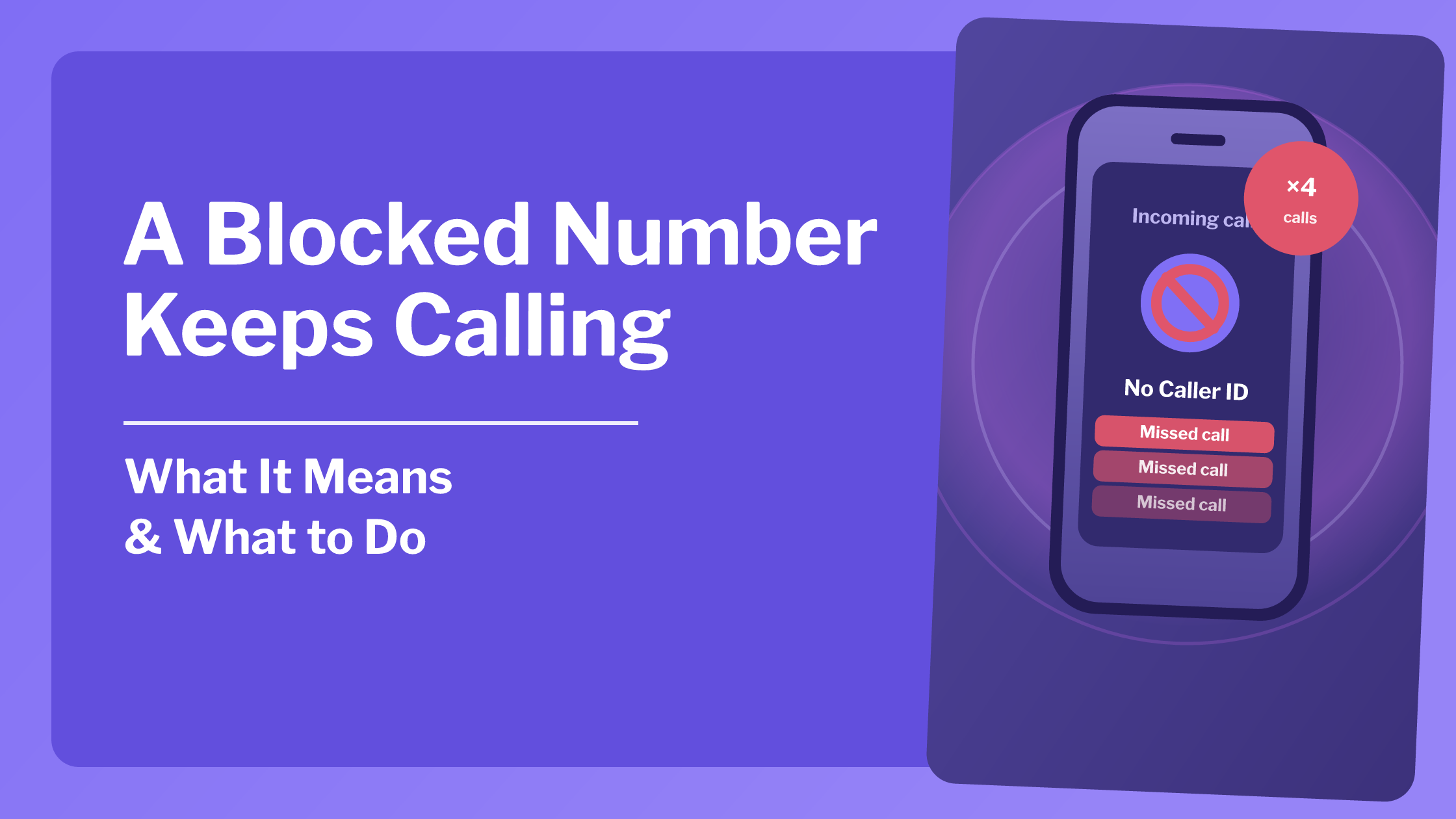
Say a blocked or No Caller ID number keeps calling and never leaves a message. Nine times out of ten, it's an automated robocall system dialing in bulk. The other real possibility is a scammer checking whether your line is live, which is why answering once tends to bring even more of them. Occasionally it's a person you know hiding behind *67. Real debt collectors have to identify themselves when you pick up. A silent number that keeps redialing usually isn't one. Either way, you can find out who it is before you decide to pick up.
For a stretch last year, a hidden number called me at 9:11 every morning. Same time, right as I sat down. Never a voicemail. I'd silence it, go back to work, and by the next day I'd half-forgotten... until 9:11 rolled around again. If that's you, the pattern's real. It's not in your head.
Why does a blocked number keep calling me?
One No Caller ID call is easy to shrug off. It's the repetition that gets under your skin, and there are only a handful of likely explanations.
Most of the time it's a robocall dialer. It dials your number and hangs up the second you don't answer. Then the queue loops back around and you get the same call again. None of it is aimed at you specifically; your number just came up in the rotation.
Sometimes it's a scammer confirming your number is real. If you've answered even once, briefly, your number can get flagged as active and passed along to other lists, which is exactly why the calls tend to multiply.
Other times there's an actual person on the other end. People dial *67 before a number to hide their caller ID, and someone you'd rather not hear from knows that trick as well as anyone. Repeated calls with no voicemail are worth taking seriously, especially after a breakup or a falling-out.
There's one more option that's actually legitimate: a debt collector or telemarketer. By law a real debt collector has to say who they are when you answer, so the silent repeat-callers usually aren't the legitimate kind.
Is it the same number calling each time?
Your missed-call log won't tell you. That's the entire point of blocking caller ID. But the timing usually gives it away.
Robocallers run on schedules, so the calls tend to land at the same hour. They arrive in bursts, then go quiet for days before starting over again. And they often ring right after you've been on your phone for something else, which is a good sign your number just got confirmed as live.
If you need to know who's behind it, that's what iCaughtYou is built for. It unmasks blocked, private, and No Caller ID calls, so a hidden number turns into an actual name you can act on.
The silent ones
Here's the part that gets to people, and honestly it's the part that got to me: they never leave a message.
That silence almost always comes down to one of two things. Either the call is automated, and robodialers rarely bother with voicemail on the early attempts, or whoever's calling doesn't want a record of having contacted you. Neither is reassuring.
People who genuinely need to reach you leave a message. A doctor's office does, and so does anyone with a real reason to get hold of you. Compare that to a number that calls on repeat and never says a word. That usually signals a scam or spam operation, and every so often someone who means you harm. For the background on how these calls stay hidden, here's why some calls show up as No Caller ID.
How to stop a blocked number from calling you
Roughly in order of effort:
Don't answer. Picking up almost always leads to more calls.
Turn on Silence Unknown Callers. On iPhone: Settings > Phone > Silence Unknown Callers. On Android: Phone app > Settings > Block numbers > Block unknown callers. Anything not in your contacts goes straight to voicemail, and your phone stops lighting up. For a lot of people this one setting is the whole fix.
Find out who it is. If the calls feel personal, you don't have to keep guessing. iCaughtYou does the lookup for you, so you get an answer and can block or flag it for good.
Add your number to the Do Not Call Registry at donotcall.gov. It won't faze a scammer, but it gives you solid footing to report any actual business that keeps calling anyway.
Report it to the FTC at reportfraud.ftc.gov if the calls smell like a scam or an illegal robocall campaign. Your report feeds the cases that get these operations shut down.
When should you be worried?
Most repeated blocked calls are just a nuisance. Take it more seriously if any of these fit:
The calls come late at night or before dawn
You've recently ended a relationship or had a serious conflict with someone
The voicemails, when they do land, are threatening or deliberately silent
Something just feels off and you don't feel safe
If any of that fits, start by writing down the dates and times, then talk to your carrier. They can sometimes flag harassment patterns even when the number is hidden. And once it's reached the point of feeling threatening, it's reasonable to involve local police, whether or not you can prove who's behind it. If you've ever picked up and worried the call itself did damage, what to do if you accidentally answer a scam call walks through the checks.
Can your carrier stop it?
Partly. The catch is that the identifying information you'd want is never sent to them at all, so there's only so much they can do. Most will block all "No Caller ID" calls at the network level if you ask, which sounds great until you remember that some legitimate callers, including certain medical offices and government lines, also call from blocked numbers. You'd lose those too.
That's the gap iCaughtYou is meant to fill. You skip the blunt block-everything switch and see who's actually calling, then decide from there. Knowing whether it's random spam or one specific person changes what your next move should be.
The bottom line
You almost never need to answer one of these blind. The pattern is almost always spam or an automated scam. The real exception is someone deliberately hiding, and that's the case where finding out who's calling matters most. Silencing unknown callers keeps your phone quiet, and reporting the obvious fraud chips away at the operations behind it. If it feels personal, that's when it pays to find out exactly who's calling. My 9:11 caller eventually gave up, and yours will too, faster if you stop feeding it answers.
If you think real money or real information has already changed hands, move quickly: call your bank and file a report at reportfraud.ftc.gov. Most of the time, though, this is just noise you can shut off.