Published 09/15/26
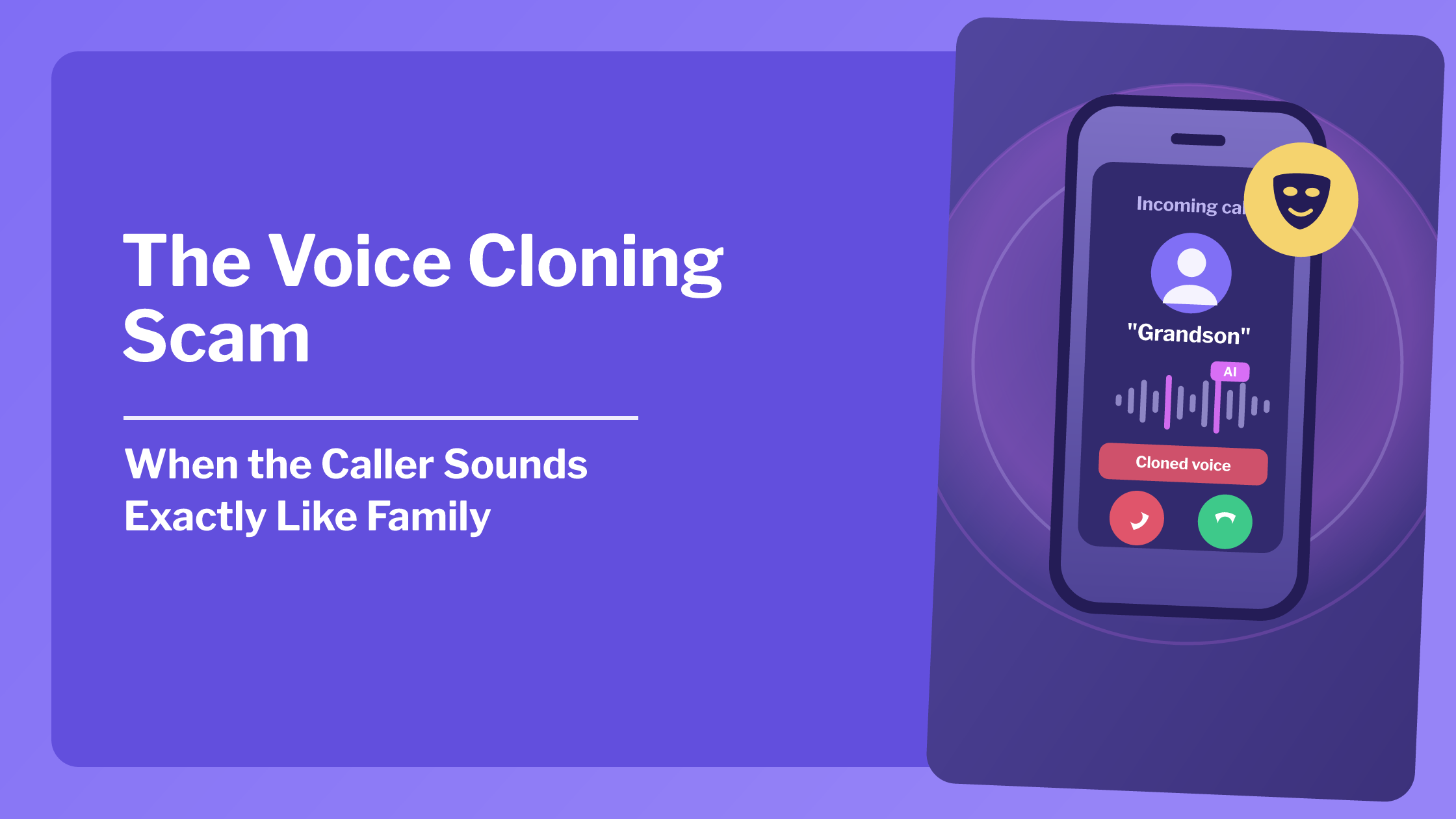
A voice cloning scam is a call where a scammer uses AI to imitate a family member's voice. They usually invent an emergency in order to pressure you to send money fast. If someone you love is stuck in an accident or under arrest, you'll do anything to get them out of it.
The voice is so convincing, you don’t even think to hang up and call the person back on their regular number. But that’s really the smart escape here. If you find yourself in this kind of situation, do that before anything else.
How does a voice cloning scam actually work?
The way the scammer does this is they take a sample of the person's voice and use AI tools to generate the speech in that person's voice. The sample usually comes from somewhere public, like a video posted on social media, and then they have all they need to do their damage. It can even copy the way the person talks, like the tone and pace, not just the voice.
Then they take this and attach it to an emergency. It freaks you out, and you send them all the money they ask for.
Why does the voice sound so real?
Because it's built from the real thing.
You really may not be able to tell it’s fake even if you know the person well! The copy sometimes sounds exactly the same as the real. Therefore, we need a solution that doesn't rely on the way it sounds.
What are the signs it's a scam, even if the voice is perfect?
Look out for these:
Secrecy. When they say something like "Please don't tell Mom and Dad" or "Don't call my wife, she'll panic", you should question it.
Urgency. This is what they use to keep you from calling the person back on their regular number to check if it’s legit. When there’s no time to waste because the court is closing or a flight is leaving, it makes you feel there’s not a moment to lose. You’d better send the money right away.
Payment method. People asking for gift cards, wire transfers, cryptocurrency, or a courier coming to your door for cash, are always scams. No court collects bail in gift cards.
A hand-off. For example, the "grandchild" gets too upset to talk and passes the phone to a lawyer or an officer. This way the clone only needs to handle the emotional opening and then a human handles the rest.
Look at the number. The call often comes from a blocked or unfamiliar number. If really done well, sometimes it can be spoofed to look like the family member’s own number, but that doesn’t prove anything either. Caller ID spoofing and the FCC's spoofing guide explains this.
What should you do while the call is happening?
Ask something only the real person would know.
Say you'll call them right back.
Call someone else in the family.
Don't send anything until you've reached the real person.
The second step is the most important. It gets you to the truth easily, and therefore it's the one that the whole scam is built to prevent you from doing.
Can you tell who was actually behind the call?
Sometimes you can.
If the call came from a blocked or hidden number, the phone itself can get to the bottom of who it was. iCaughtYou is built for this, where it can identify the number even behind hidden calls and then tells you who it was. So even though the voice can be fake, who it came from is harder to hide.
Can you really find out who's behind a hidden number goes into what's realistic to expect and where the limits are.
Who gets targeted, and why?
Grandparents are the classic target, which is why this is often called the grandparent scam. But it’s not limited to only them.
Anyone who has a family member with their voice posted online somewhere (practically everyone) can be a target. And the more information is shared publicly about that person, the more believable the scam will be. Scammers choose people they can get enough details about, then make up a story to go along with that person’s life situation.
How do you make your family harder to target?
A few small changes to cut the odds:
Agree on a family code word for real emergencies, something no one would ever post.
If money is ever requested in an emergency, hang up and call back on a saved number. Even if it feels rude in the moment.
Talk about this scam out loud with older family members. It’s important for them to be educated on what’s happening in the world and what to look out for.
Bottom line
A cloned voice is the new tool in a very old scam of inventing an emergency and then demanding money. The voice may be very convincing, and that's why it's something you have to be wary of. Just call them back on a trusted number to make sure it’s really them.
If money already went out, contact your bank right away to try to stop or reverse the transfer, then report it to the FTC at reportfraud.ftc.gov.
What to do if you gave a scammer your personal information covers the rest of the recovery steps.