Published 07/22/26
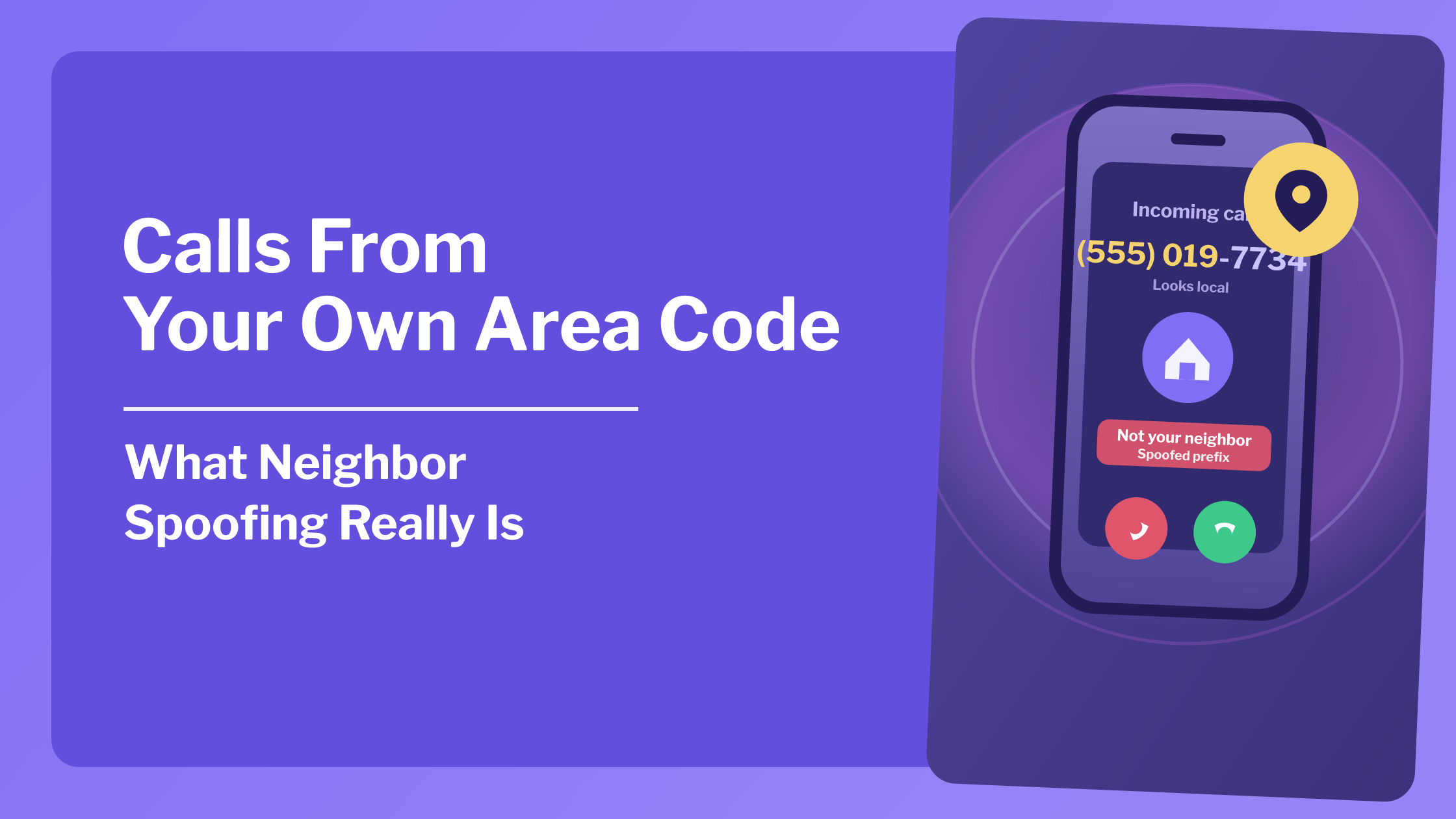
Another annoying trick up the sleeve of the scammer. It’s called neighbor spoofing, where the caller fakes a number that matches your area code, and sometimes also the 3 middle digits, to make it look familiar. It looks like the call is coming from nearby and so it’s much more likely you’ll answer.
Caller ID spoofing is the umbrella term for faking any number; neighbor spoofing is just the version that specifically makes it look like someone you know. This works simply because people are way more likely to answer if they think it's a friend calling!
Why does a scam call show my own area code?
Robocall operations run software that automatically matches the outgoing caller ID to your area code. It then just mixes up some of the other numbers and that’s the whole trick.
The result looks like a local number, when meanwhile, it may be coming from overseas!
This trick is mostly used by robocallers trying to sell stuff or make false legal threats. Though it’s sometimes used by telemarketers or scam operations as well.
Is this the same as caller ID spoofing?
Correct, that’s exactly what it is. Just another version of the same thing.
Spoofing can fake any number at all, neighbor spoofing just narrows it down to numbers that match yours… That’s what makes it personal so you’re more likely to answer.
How do you know it's neighbor spoofing and not a real neighbor?
This is tricky, but there are a few points to know that can give it away.
After you answer one of these calls, there’s usually a slight pause or an outright robotic voice.
They try selling you something right away. These ones are not usually too good at being casual, they’re too focused on your car’s warranty.
If you don’t recognize the rest of the number at all, that can also be a sign. Even though you may not have all your neighbors’ numbers memorized, maybe you would recognize ones of people that called you before.
Should you answer a call that looks local?
There’s no perfect answer to this. You just have to decide if you’re in the mood of taking chances.
If you’re expecting an unfamiliar call, like from a doctor’s office, it makes sense to answer. If not, you can let it go to voicemail. Then if they leave a message, you’ll know who it is and if you should call back. Another option is to answer and then just quickly hang up if it’s a robocall.
What can you actually do about neighbor spoofing?
There's no setting that stops your number from being impersonated, since the spoofing happens entirely on the caller's end. But you can do a bit on your own phone to protect yourself.
Turn on your carrier's spam filtering. T-Mobile Scam Shield, AT&T Call Protect, and Verizon Call Filter all try to catch known robocall patterns, including a lot of neighbor-spoofed traffic.
Use your phone's built-in call screening. Both iPhone and Android have options to silence unknown callers or route them to voicemail automatically.
Don't engage if you do answer a robocall! Even pressing a number to "opt out" confirms your line is active and will just get you more calls!
Report persistent patterns. The FCC's robocall guide covers how to file a complaint if it’s getting too much.
If blocking every spoofed number feels like it's not making a dent, that's because it usually isn't. The difference between blocking and blacklisting covers why a blocked number rarely stays gone for long.
Will neighbor spoofing ever stop?
Carrier authentication standards have helped a little, since it flags some spoofed calls before they have a chance to come through. It hasn’t eliminated them completely, though, because spoofing tools keep adjusting to work around the filters.
What if the calls are actually coming from someone you know?
Occasionally a familiar-looking number really is a neighbor, which is what makes it so tricky… So, the way you can be sure about who is actually calling you, is with iCaughtYou. It looks up the entire number (not just the area code) to find a name behind it.
Bottom line
A call that shares your area code isn't automatically a neighbor. It's often just a robocall hiding. Don’t assume you know the person just because the first 6 digits match.
Let the ones you don't recognize go to voicemail and turn on your carrier's filtering.