Published 09/22/26
Protecting a parent from phone scams comes down to two things: making it harder for scam calls to reach them, and also giving them the clarity of when to hang up.
The first part is mostly settings and tools for you to set up together. The second is more about educating the previous generation about what’s going on in the world (sadly).
There’s also an app that can help with these.
Why are older adults targeted so heavily?
They’re very reachable.
Older adults are more likely to:
still have a landline
answer a call from a number they don't recognize,
be home during the day, during the hours the call centers are running
have their number in stored old directories and data-broker files
Who's really selling your phone number covers how those lists get built and sold.
There's a social piece too, that makes them easier to target. A generation raised to be polite on the phone finds it hard to hang up on someone mid-sentence… Scammers know exactly how to use that politeness to get what they want.
Which scams hit parents most often?
Put a name to each type of call when discussing it with your parent. It will help them recognize it fast so they can act on it before it’s too late.
The grandparent scam: a caller claims to be a grandchild in trouble and needs money. It often uses a cloned voice, which the AI voice cloning scam that sounds like your family explains in detail.
Government impersonation: Scammers pretending to be "Social Security," "Medicare," or "the IRS". Signs of a government impersonation scam lays out how you can catch it easily.
Tech support: a call claiming the computer has a virus and needs remote access to fix. Then, once they're in, they're in.
Then there’s the ones where they slowly ease into it: sweepstakes, charities that don't exist, etc.
Teach them that in any of these scenarios, hang up and call back the number you have saved for the person/agency who just claimed to call you.
How do you bring it up without making them feel foolish?
The way to do this in a sensitive way is by putting all the blame on the scammers. It’s not their fault that the world can be so conniving.
Instead of saying “You should be more careful”, try something like "These calls are designed by professionals to fool anyone".
It will also help if you admit times where you almost fell for it yourself. Then you’re not coming across as better or smarter than them. When they don’t feel like they’re being shamed, they can accept what you have to say.
The goal here is for them to have control of who can reach them, not that you’re trying to supervise them.
What settings should you set up together?
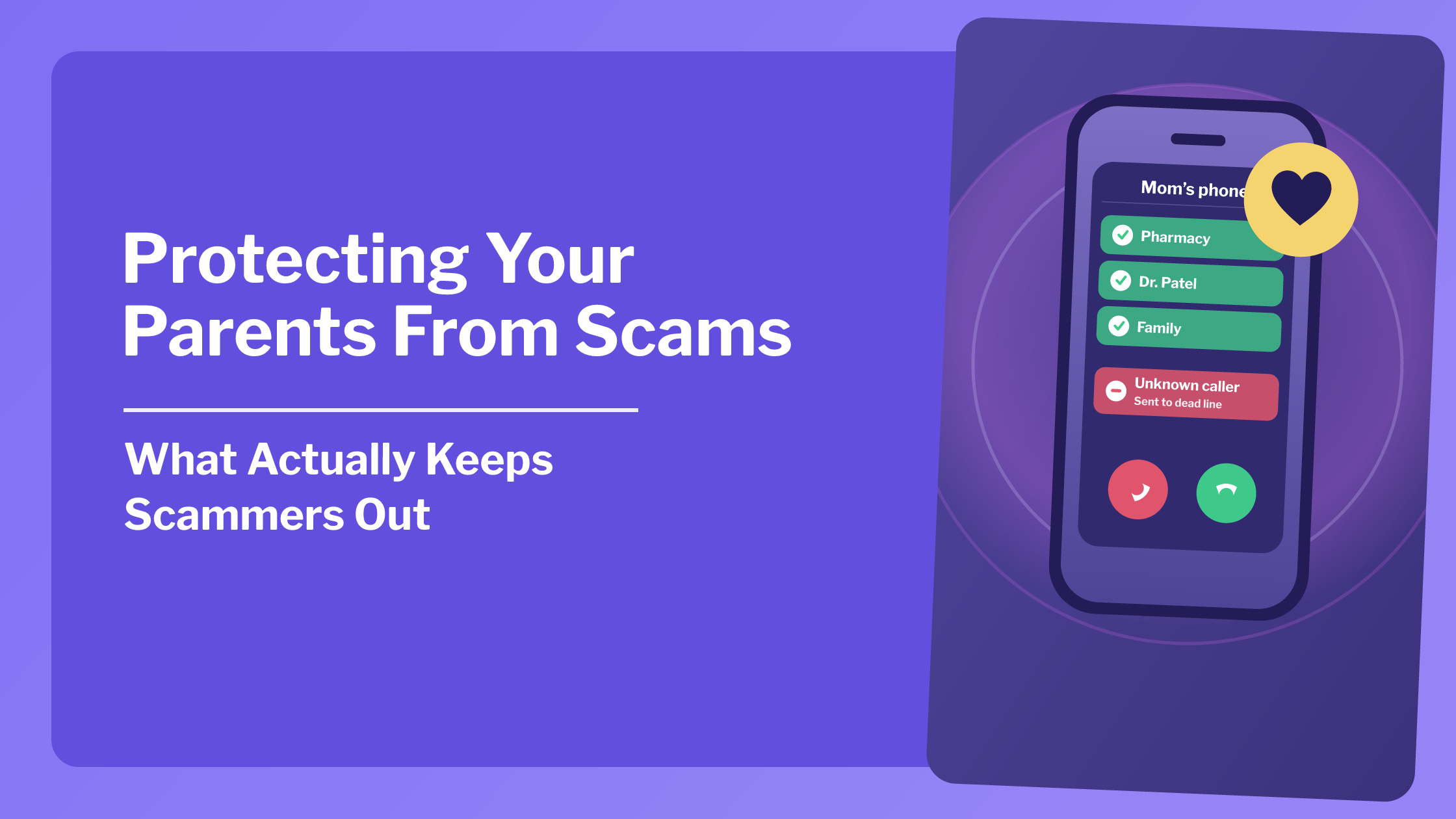
Turn on the carrier's spam filter
Silence unknown callers. Just make sure all important numbers are saved to contacts, first, so they don’t miss any of those calls along with the spam...
Record a real voicemail greeting. It will encourage regular people to leave a voicemail so the robocalls that just hang up will stand out.
Put a callback list by the phone. On a paper, write the real number for their bank, doctor, Social Security, their kids, etc. Then, when one of those people claim to be calling, they can easily hang up and call a trusted number.
What kind of family rules can help?
For the calls that do come through, preparation is key. Set up some known rules in your family to prevent these calls from being harmful.
Rulle #1: Always call back on a trusted number before handing over any valuable information
Rule #2: Decide on a family code word for real emergencies. Don’t post it anywhere online, and then your parent will know clearly when it’s just a fabricated story.
What can you put in place beyond the handset?
The phone’s built-in settings do help, however, it does leave gaps.
iCaughtYou finds out who is behind any number that calls, and allows you to blacklist it forever. It doesn’t matter if they rotate numbers and it won’t accidentally block a family member who’s calling from a new number. It uncovers who it is before the call is answered, we don’t run into the issue of being afraid of rudeness.
What are the signs they may already be caught up in something?
You can often spot the pattern of a scam before any money is gone.
Some signs to look out for:
Secrecy about the phone
A new ‘phone friend’ you’ve never heard of
Gift cards bought in quantity
Sudden interest in cryptocurrency
Mail from sweepstakes and prize companies
If you see one of these, ask your parent about it. Many times they suspect something’s fishy themselves, and just need someone to confirm it for them.
What if money has already gone out?
That’s when you have to move fast.
Call their bank or card issuer right away, to try to reverse the transfer. Then report it: the FTC at reportfraud.ftc.gov, and the Justice Department's National Elder Fraud Hotline. The latter is staffed to guide older adults on what to do in this situation.
What to do if you gave a scammer your personal information covers the fuller recovery checklist, including credit freezes.
Bottom line
There are many things you can do to help a parent be less of a target for scams. And when they are targeted, at least they know how to handle it.